A closer look at industrial investment, emerging demand and market access across the region.
South America is attracting renewed attention from international business. The energy transition, changing global supply chains and growing demand for strategic resources are accelerating investment across the region. But the opportunity extends well beyond commodities. Brazil, in particular, is seeing substantial investment in manufacturing, energy systems and digital infrastructure – developments that are opening new markets for industrial technology, engineering and specialised services.
For European small and medium-sized enterprises (SMEs), this shift deserves closer attention.
Why South America’s Industrial Landscape Is Changing
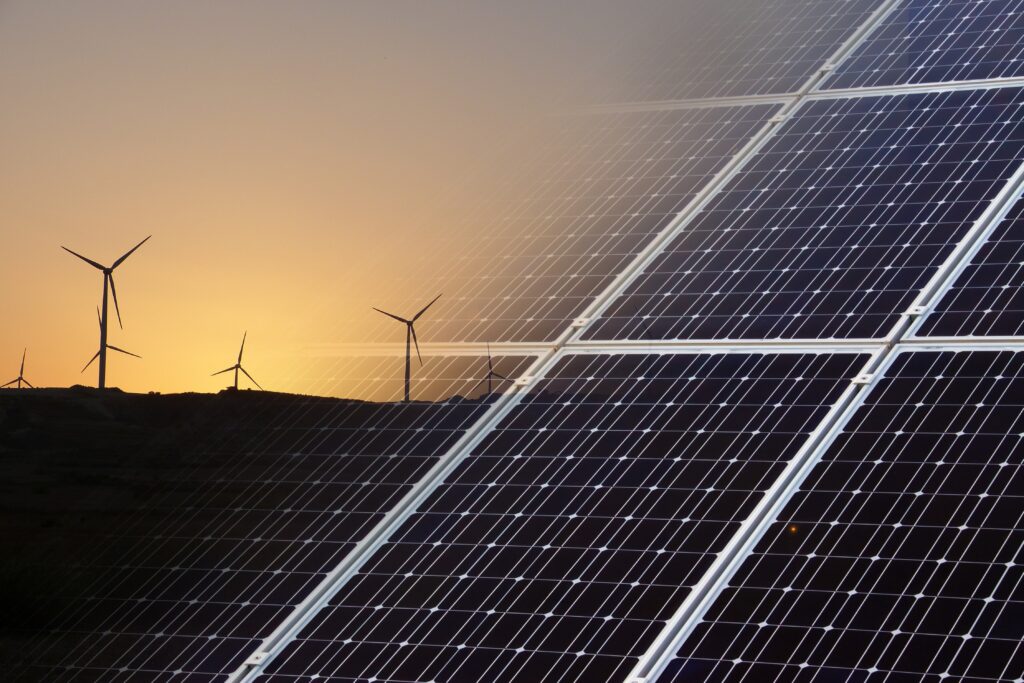
The global demand for critical raw materials is one important driver. According to the International Energy Agency, demand for lithium could increase fivefold by 2040, while demand for graphite and nickel is projected to double. Copper demand is also expected to rise significantly, driven in part by expanding electricity networks, industrial electrification and data infrastructure.[1]
South America is well positioned to benefit from these developments. Brazil has substantial mineral resources and a broad industrial base; Chile and Peru are major copper producers, while Argentina and Chile are important players in the lithium sector.
Yet the strategic significance of these resources lies not simply in extraction. Developing them requires investment throughout the industrial value chain: processing facilities, reliable energy supplies, transport infrastructure, advanced equipment, automation and technical expertise. These requirements are closely connected to the capabilities of many European industrial companies.
Brazil’s Industrial Investment Boom: Four Major Projects Driving Growth
The scale of this transformation becomes clearer when looking at actual projects.
WEG – Battery energy storage: In Santa Catarina, Brazilian manufacturer WEG is expanding its investment in a new battery energy storage systems (BESS) factory in Itajaí. The project is now expected to involve R$ 330 million in investment, with annual production capacity of up to 4 GWh once operational. The facility will incorporate highly automated production processes and is scheduled to begin operations in the second half of 2027.[2]
BYD – Automotive manufacturing: In Bahia, BYD has invested R$ 5.5 billion in its vehicle manufacturing complex in Camaçari. The plant began production in 2025, with an initial capacity of 150,000 vehicles per year and plans to scale up substantially as the project develops.[3]
Stellantis – Regional investment programme: The automotive sector is also being reshaped by established manufacturers. Stellantis has announced an investment programme of R$ 30 billion across South America between 2025 and 2030, supporting more than 40 new products, Bio-Hybrid technologies and decarbonisation initiatives throughout its supply chain.[4]
Ascenty – AI-ready data centres: A further example comes from the digital economy. Data centre operator Ascenty has announced US$ 1.2 billion in investment for four new AI-ready data centres in the São Paulo region. With a combined capacity of 150 MW, the facilities were already fully pre-leased when announced.[5]
These projects span different industries, but their implications reach far beyond the companies making the investments. They generate demand for production equipment, electrical engineering, automation, control systems, industrial software, cooling technology, energy management and specialised technical services.

Industrial Business Opportunities in Brazil for European SMEs
This is where the opportunity for European suppliers becomes more tangible. Brazil’s industrial expansion is creating requirements for technologies that improve productivity, reliability, energy efficiency and operational performance.
• Machinery and automation: production lines, robotics, sensors and process control.
• Energy and electrification: power distribution, transformers, storage systems and energy management.
• Digital infrastructure: industrial software, data centre equipment, connectivity and cybersecurity.
• Engineering and environmental technology: process optimisation, water treatment, cooling and emissions reduction.
Not every opportunity will involve supplying a large corporation directly. Smaller specialised manufacturers and technology providers can also find openings among local engineering firms, system integrators, distributors and industrial suppliers.
The key is to identify where a company’s expertise addresses a specific need in the local market – and to establish the right commercial relationships.
EU-Mercosur Trade Agreement: What It Means for European Industrial Companies
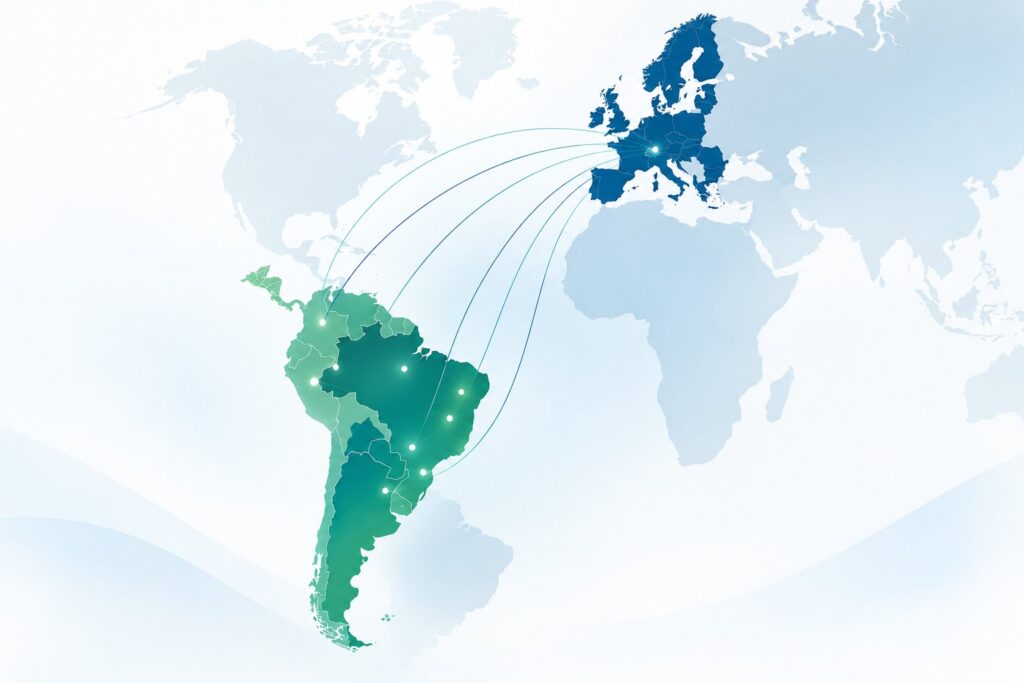
The EU-Mercosur Interim Trade Agreement has been provisionally applied since 1 May 2026. By reducing tariffs and other trade barriers, it improves the conditions for European companies seeking to access Mercosur markets, including Brazil. For industrial suppliers, the agreement adds further momentum to an already significant commercial relationship.[6]
How European Industrial Suppliers Can Enter the Brazilian Market
Brazil is a substantial and diverse market, but entering it successfully requires more than identifying promising sectors. Companies need a clear understanding of local market structures, customer expectations, competition, regulations and the partners required to establish a lasting presence.
For European SMEs, a focused approach is often the most effective: assess the market, identify the most relevant customers and applications, validate the commercial proposition and build relationships on the ground before committing significant resources.
How Gateway Mercosur Supports European SMEs in Brazil and Latin America
Gateway Mercosur supports European companies in this process – from market assessment and entry strategy to localisation, partner development and practical business development. With a focus on Brazil and Mercosur and a wider reach across Latin America, the initiative connects European industrial capabilities with opportunities throughout the region.
The key is knowing what it takes to make your business work here.

Sources
[1] International Energy Agency (IEA), Global Critical Minerals Outlook 2025 – Overview of outlook for key minerals: https://www.iea.org/reports/global-critical-minerals-outlook-2025/overview-of-outlook-for-key-minerals
[2] WEG, WEG expands project for battery energy storage systems (BESS) factory in Itajaí, Santa Catarina, 25 September 2026: https://ebs.publicnow.com/view/70BD67A529065D770FFCA45A460A0A994EF85529
[3] Brazilian Government, BYD inaugurates R$ 5.5 billion vehicle manufacturing complex in Bahia, 9 October 2025: https://agenciagov.ebc.com.br/noticias/202510/lula-acompanha-inauguracao-de-complexo-da-byd-na-bahia-e-reforca-compromisso-com-a-reindustrializacao
[4] Stellantis, Stellantis announces R$ 30 billion investment in South America, 6 March 2024: https://www.media.stellantis.com/br-pt/corporate/press/stellantis-anuncia-investimento-de-r-30-bilhoes-na-america-do-sul-o-maior-investimento-da-industria-automotiva-na-regiao
[5] Ascenty, Ascenty announces new AI contracts and US$ 1.2 billion investment for expansion, 28 May 2026: https://ascenty.com/blog/news-ascenty/ascenty-anuncia-novos-contratos-de-ia/
[6] European Commission, EU-Mercosur Agreement: https://policy.trade.ec.europa.eu/eu-trade-relationships-country-and-region/mercosur/eu-mercosur-agreement_en